A refrigerator that hums without cooling has lost airflow or heat exchange, and the response window is measured in hours. Run the short triage below, then call while the freezer still holds the line.
Five minutes, in order
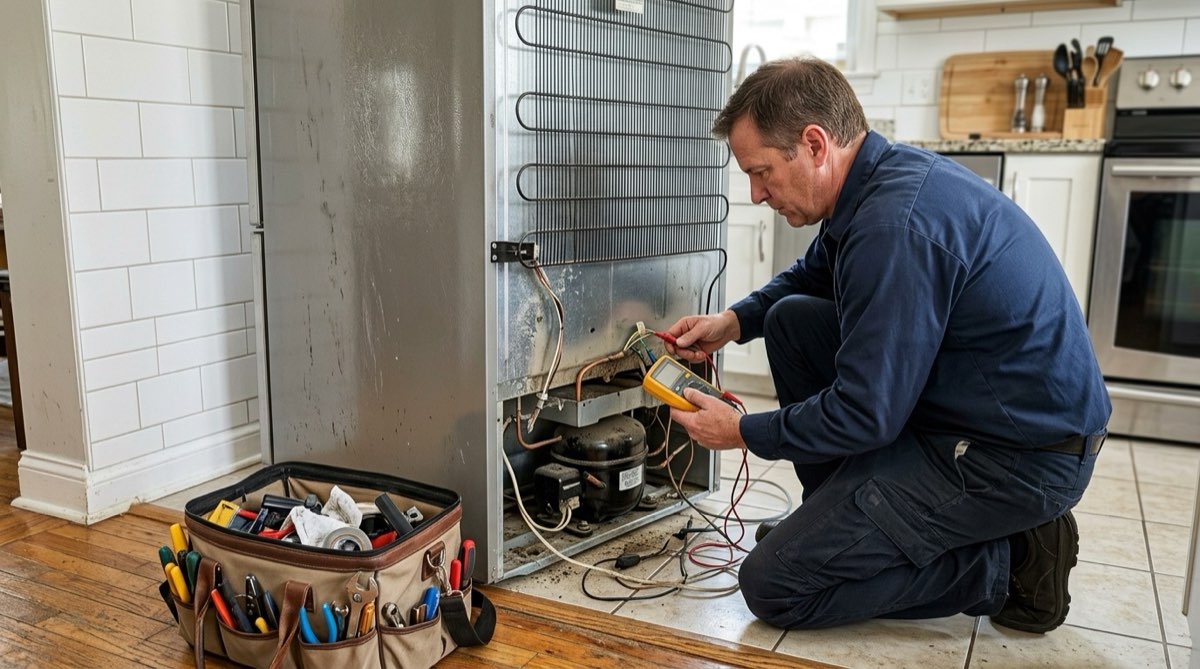
Settings (bumped more often than believed), freezer vents (blocked by food), gaskets (a paper slip should drag), then pull the machine and inspect the condenser coils. Coils wearing a decade of felted dust cannot shed heat — the most fixable 'broken fridge' in the trade.
Sound map
No compressor hum: start relay or compressor. Quiet where a fan should whir — condenser below, evaporator behind the freezer wall: warm zones with a healthy compressor. Rhythmic clicking: the relay failing to start the compressor; that is a same-day call, not a weekend project.
Defrost failures and their alibi
A frost-sealed back panel means the defrost heater, thermostat, or control board quit. The signature: fridge fails, mysteriously recovers after being unplugged, fails again. The recovery is not luck — it is the diagnosis.
The Toledo garage paradox
Garage refrigerators here fail in winter, not summer: below about 40 degrees, single-thermostat units stop running long enough to keep the freezer frozen. If the garage fridge dies every January, that is design, not defect — a garage kit or a different unit is the fix. Summer adds the quiet killer: GFCI outlets tripped by storms, discovered by smell in August.
The hour rule
If the five-minute triage clears and the box is still warming, book same-day within the hour — cooling failures only travel one direction. Fans, relays, and defrost parts stay cheap precisely when caught early.
Report the sound map and any frost pattern, send the tag, and keep the doors closed. The thermal mass is on your side until the truck arrives.