When baking turns unpredictable, the oven is misreporting temperature — and it does so for a short list of mechanical reasons, every one of them diagnosable in a single visit. Start by measuring the lie, then match the fix to its size.
Quantify first
Ten-dollar oven thermometer, middle rack, 350 degrees, read at twenty minutes. A steady offset under about 25 degrees is a calibration adjustment; big swings or one cold corner mean parts.
The usual hardware
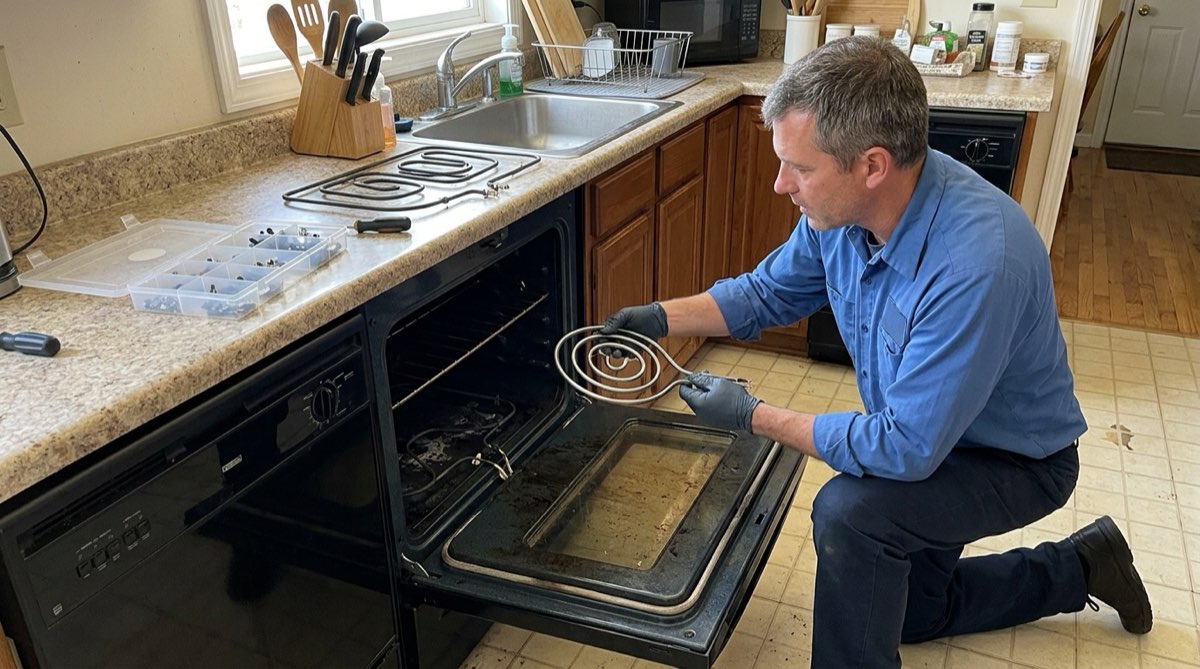
Electric elements fail visibly — blisters, dark bands, sagging spots — and cheaply. Temperature sensors drift with age and read out in ohms against spec in two minutes. Gas igniters weaken and drop the flame mid-bake, which the cook experiences as chaos and the tech recognizes on sight.
A dead convection fan turns advertised evenness into a hot rear wall; listen for it spinning when the mode engages.
Controls and calibration
Most boards accept a plus-or-minus 35 degree user offset — the right tool for small consistent error, a bandage for a failing sensor. Post-outage weirdness gets the two-minute breaker reset before anything else; wedged boards are a real genre in Toledo storm seasons.
Two local footnotes
Self-clean cycles are the classic finisher for aging elements — an oven that died the day after cleaning itself has named its own suspect. And in century-old Toledo houses, a range on a tired circuit can brown out mid-preheat: if the kitchen lights dip when the oven works, mention it — that visit needs a different kind of attention.
Call it in with the measurement
The thermometer's verdict, the model tag, and the origin story — post-self-clean, post-outage, or gradual — usually name the failed part before the visit starts. Bring those three and skip further test bakes; the data is in.
If the kitchen lights dip when the oven works, lead with that. It changes what the visit checks first.